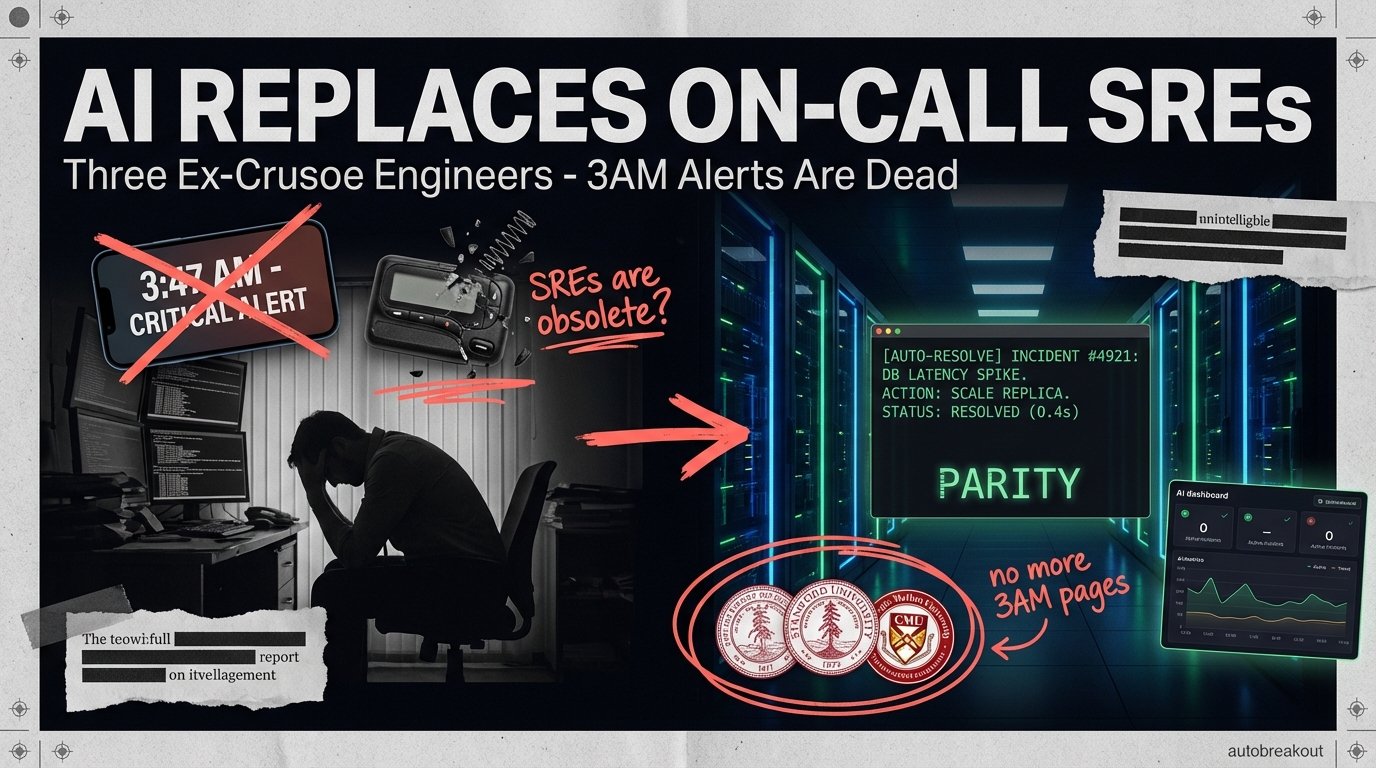
The Corporate Exit
Wilson, Coleman, and Jeffrey all worked at Crusoe Energy Systems - the AI cloud infrastructure company. Wilson at MIT, Coleman at Stanford, Jeffrey at CMU. Three of the best CS programs in the world, all converging on one insight.
On-call SRE rotations are brutal. Engineers get paged at 3 AM, spend 45 minutes triaging an incident that follows the same pattern as last month, and lose a night of sleep. Crusoe showed them what high-availability systems need. They decided to automate the human part.
What Parity Actually Does
Parity is the world's first AI SRE. When an incident fires, Parity autonomously triages it, investigates root causes, suggests remediations, and can execute fixes - all without waking up a human.
Why SREs Should Pay Attention
The average SRE costs $180-250K/year in Silicon Valley. On-call burnout is the #1 reason SREs leave. Most incidents follow patterns that repeat monthly. The combination of high cost, burnout, and pattern-based work makes SRE one of the most automatable roles in tech.
Three engineers from the same AI cloud company, from three of the best CS programs in America, all deciding the same thing: on-call SRE work can be done by AI. That's not a guess. That's an observation from inside the system.
The Breakout Pattern
They built infrastructure at Crusoe. They watched humans manage it. They built the AI to replace that management. First-hand operational insight is the moat that no amount of training data can replicate.
That's the breakout.
Your domain expertise is the moat.
Explore 50 startup ideas for engineers who refuse to compete for shrinking jobs.
Browse 50 Ideas